

Robotics Program “Build Yourself”
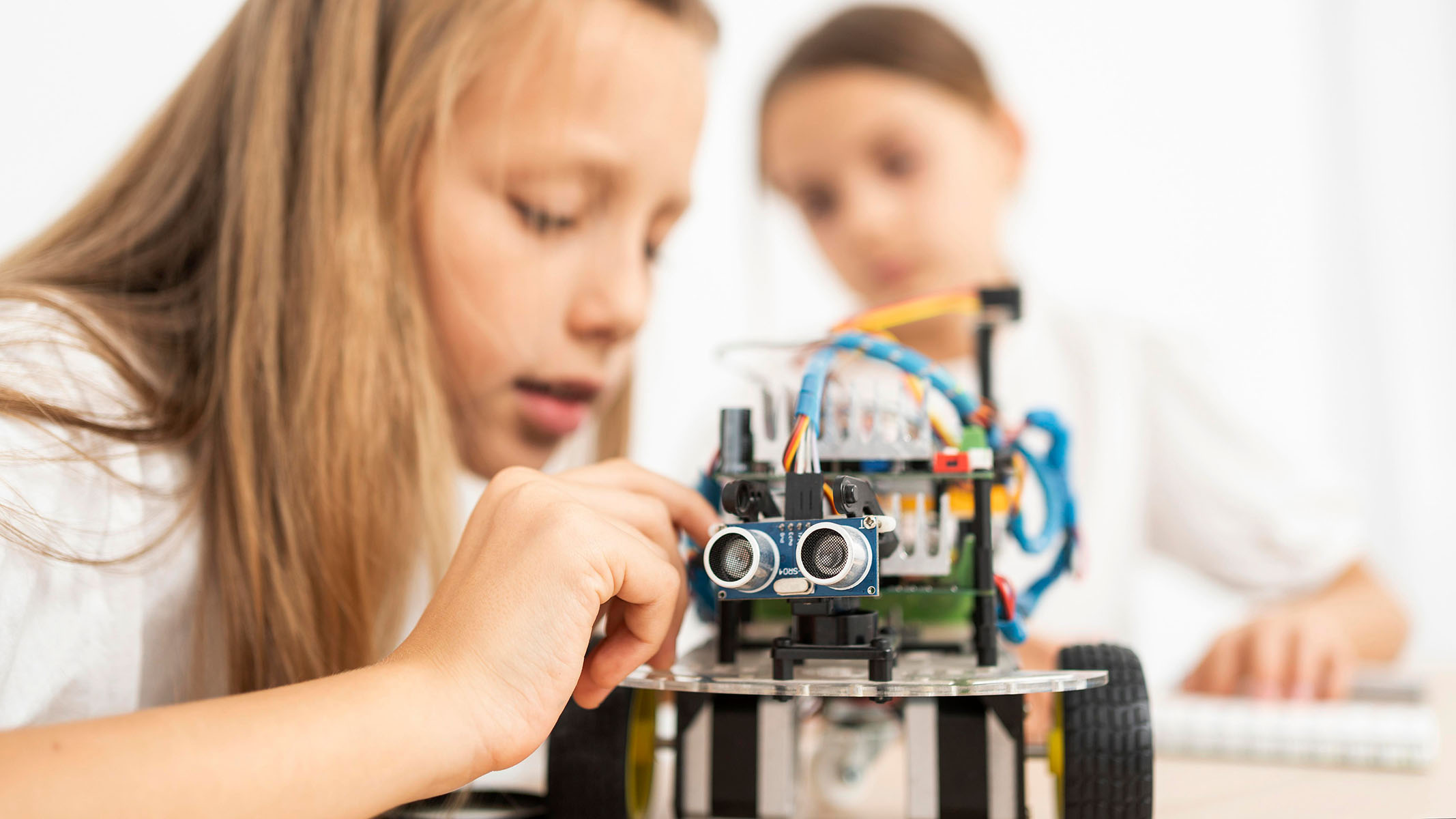
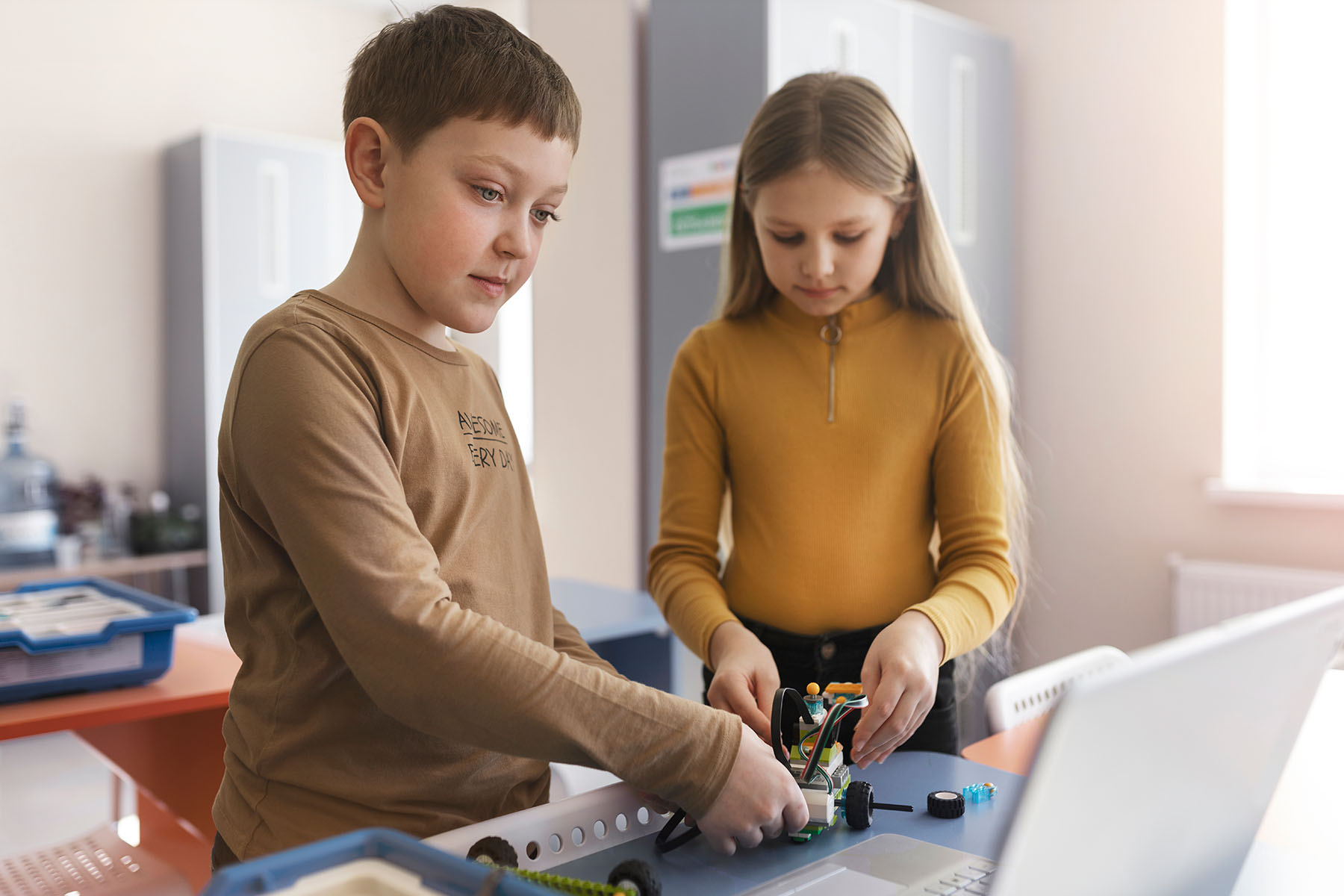
Picture your child crouching on the floor, watching a robot they just programmed dodge an obstacle — then jumping up to fix the code when it clips a corner. Children choose their own challenge level each day, so a bold first-grader and a cautious fifth-grader both feel stretched. By Friday, they’re writing programs that navigate a maze on their own.
What They Learn
- Block-based programming: sequences, loops, conditionals, variables
- Sensor input — light, sound, color, tilt, and obstacle detection
- Building games from scratch (e.g., programming Simon Says on a robot)
- Debugging — finding and fixing what went wrong
- Presenting their work and explaining their thinking
Tools: Codey Rocky & mBot by Makeblock, mBlock (MIT Scratch-based)
What Makes This Different
- Self-paced challenge system. Green / Orange / Purple — the student chooses their level, not the teacher.
- Movement-based learning. Robots on the floor, students moving between stations — not sitting at desks.
- Honest self-assessment. “Does it work every time? Show me.” No partial credit.
- Role rotation. Coder, Tester, Designer, Presenter — every child tries every role.
No prior experience needed.

3D Design & Printing Program “Make It Real”
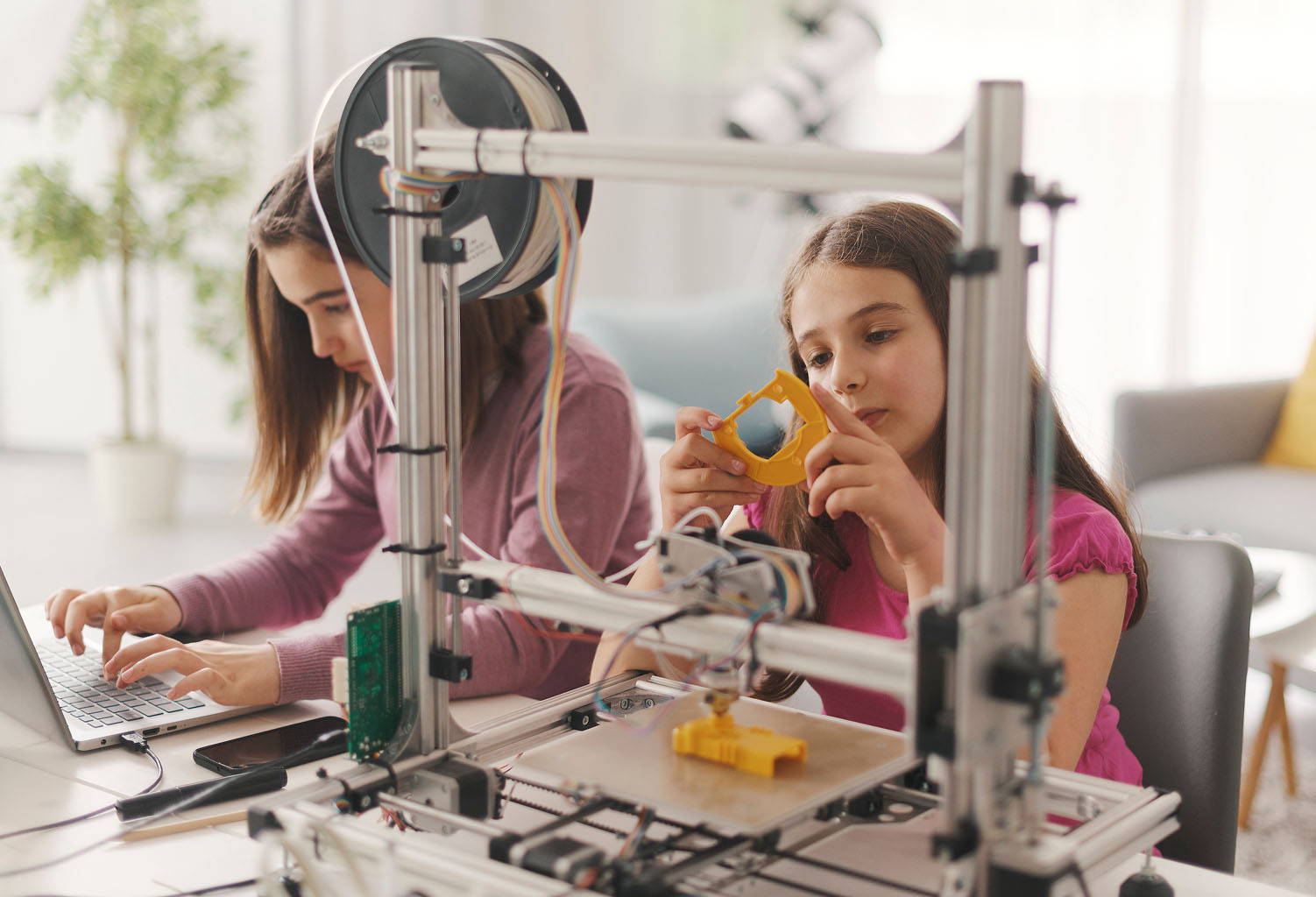
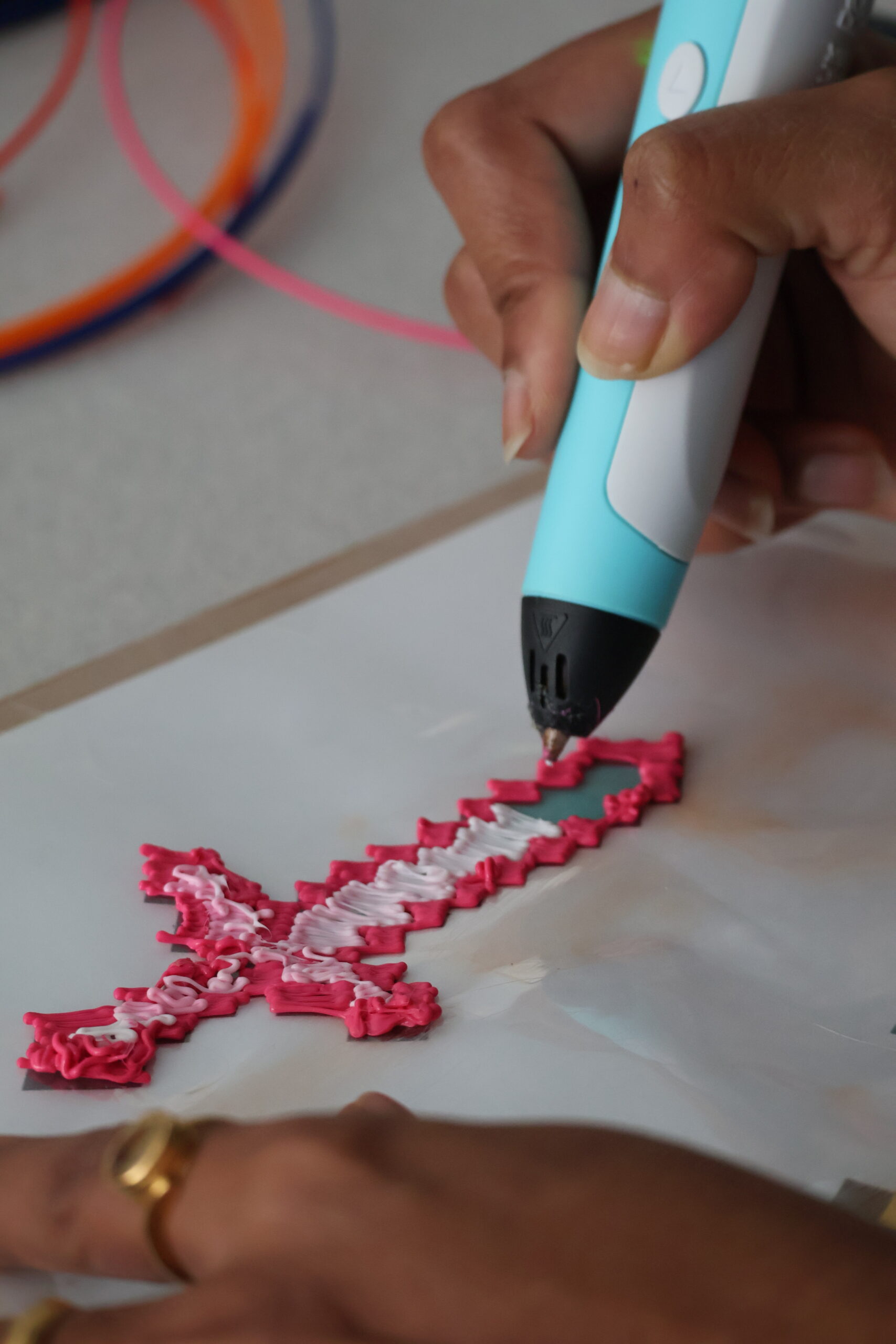
Your child designs a creature in the morning and holds the finished 3D print by the end of the day — solid, real, sitting in their hand. Each day builds on the last, so by Friday they’re designing functional objects they dreamed up themselves. Art-minded kids sculpt with 3D pens; engineering-minded kids design on screen. Both paths are taken seriously.
What They Learn
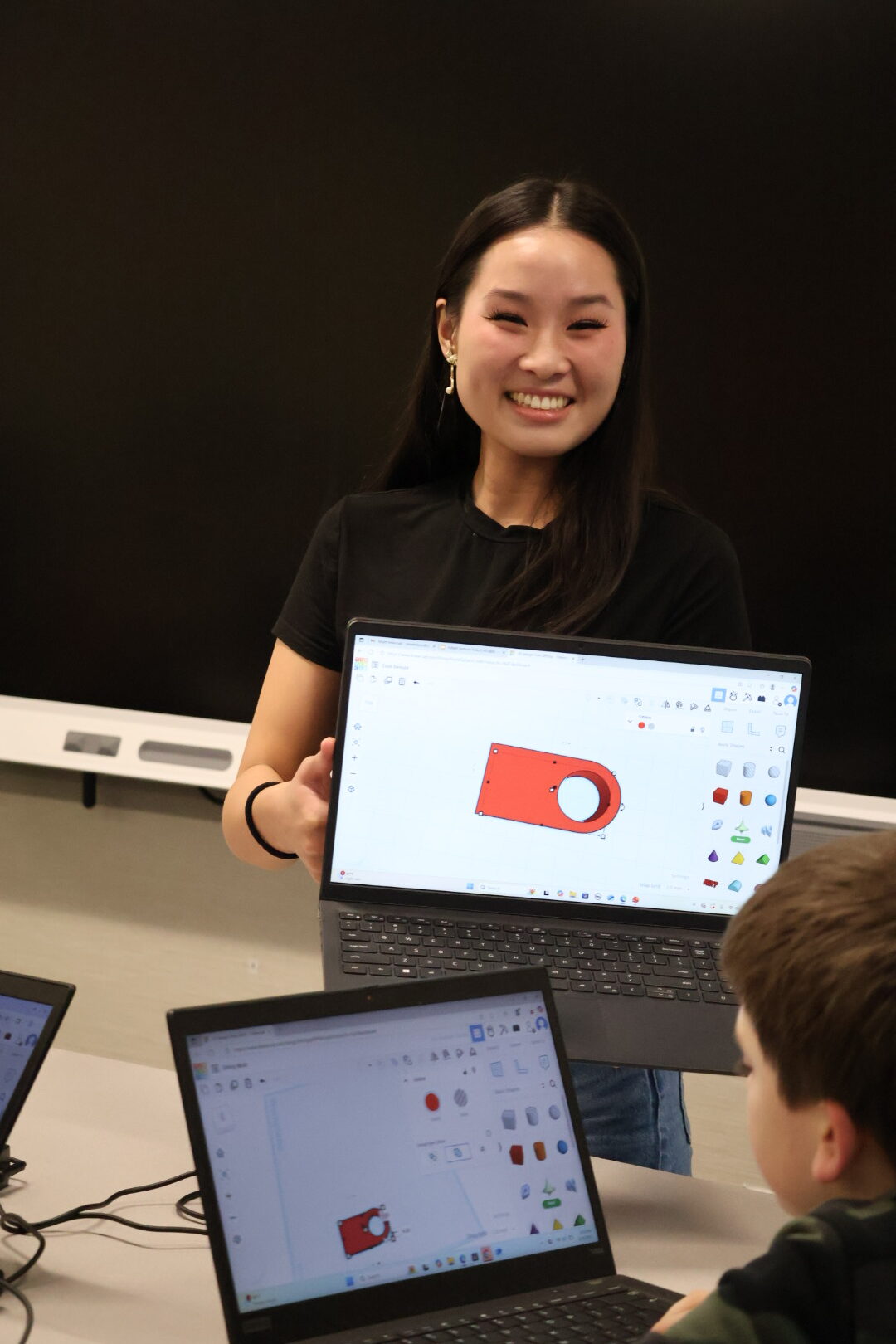
- 3D design fundamentals: shapes, grouping, boolean subtraction, text, measurement
- Engineering thinking: sketch → build → test → iterate → present
- Printability rules — what works on a real printer and why
- Remixing existing designs into something new
- Self-assessment and design documentation in the Designer Notebook
Tools: TinkerCAD (Autodesk), Bambu Lab A1 Mini printers, SCRIB3D 3D Pens
What Makes This Different
- Designer Notebook. Sketch before you build, plan before you click, track your own skills honestly.
- Real tools, not toys. Bambu Lab = professional printer. TinkerCAD = real Autodesk CAD software.
- Two creative tracks. Engineering via TinkerCAD, art via 3D pens — neither is lesser.
- Self-paced challenge system. Green / Orange / Purple — your child picks the level that stretches them.
Every printed object goes home. No prior experience needed.

Game Design Program “Play, Design, Think”
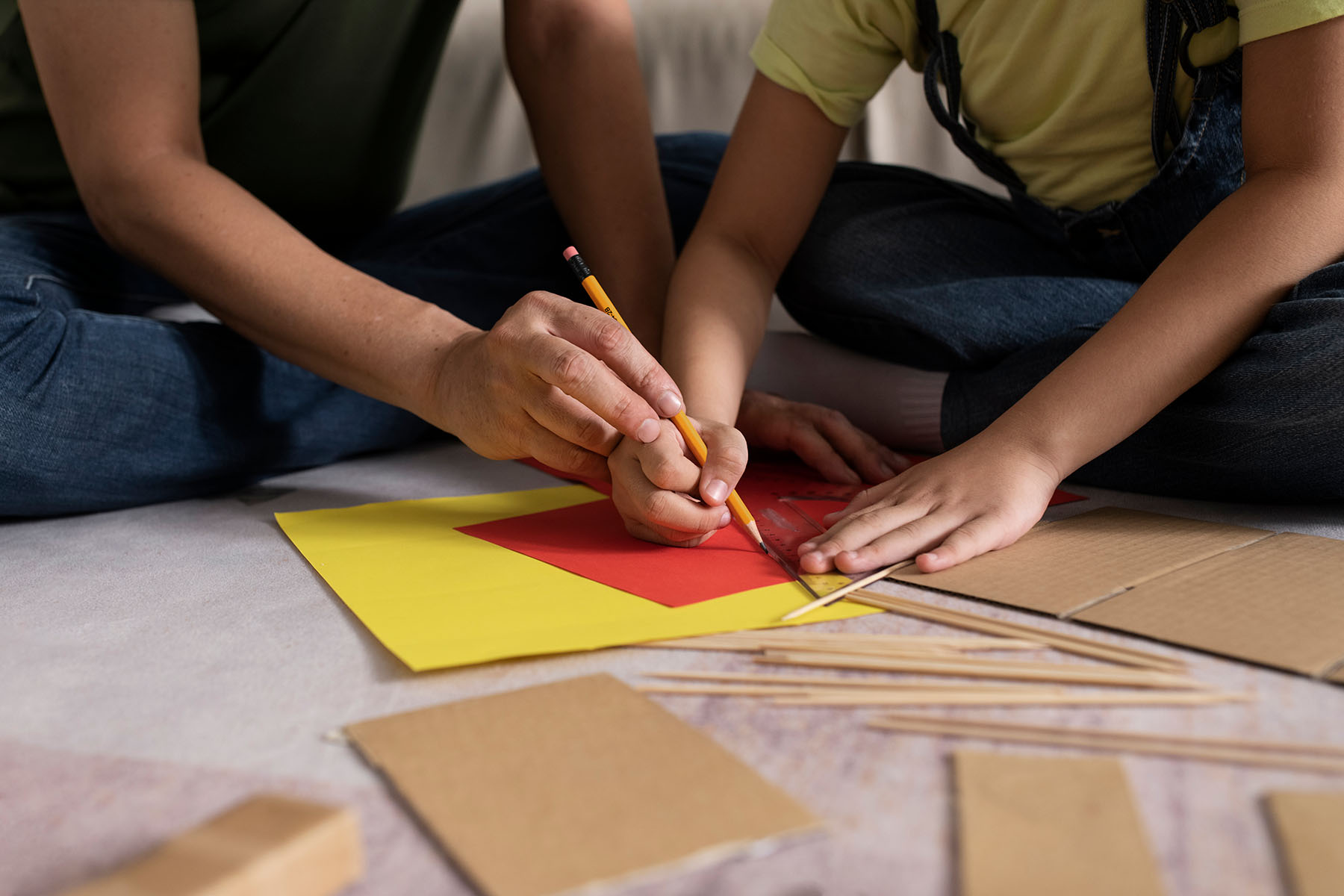
Your child invents an original board or card game from scratch — cardboard, tokens, dice, hand-written rules. They playtest with classmates, watch where the rules break, and redesign. On Friday afternoon (Game Night), you sit down and play their game. Zero screens, 100% thinking.
What They Learn
- Systems thinking — writing rules is programming without a computer
- Playtesting — watching others play is debugging in real time
- Theory of mind — seeing your game through someone else’s eyes
- Applied mathematics — balancing luck and skill so the game is fair
- Craft and presentation — building and explaining something you’re proud of
What Makes This Different
- Zero screens. 100% hands-on with physical materials — cardboard, markers, dice, tokens.
- Playtest Protocol. Formal feedback: “What was confusing? When were you bored? What was fun?”
- Role rotation. Mechanic Designer, Artist, Rules Writer, Tester — discover where you shine.
- Named design rules. Each day introduces a thinking tool like “The Loop Is the Game” and “Interesting Choices.”
Your child takes home a finished, playable original game and a Designer Notebook of ideas and iterations.
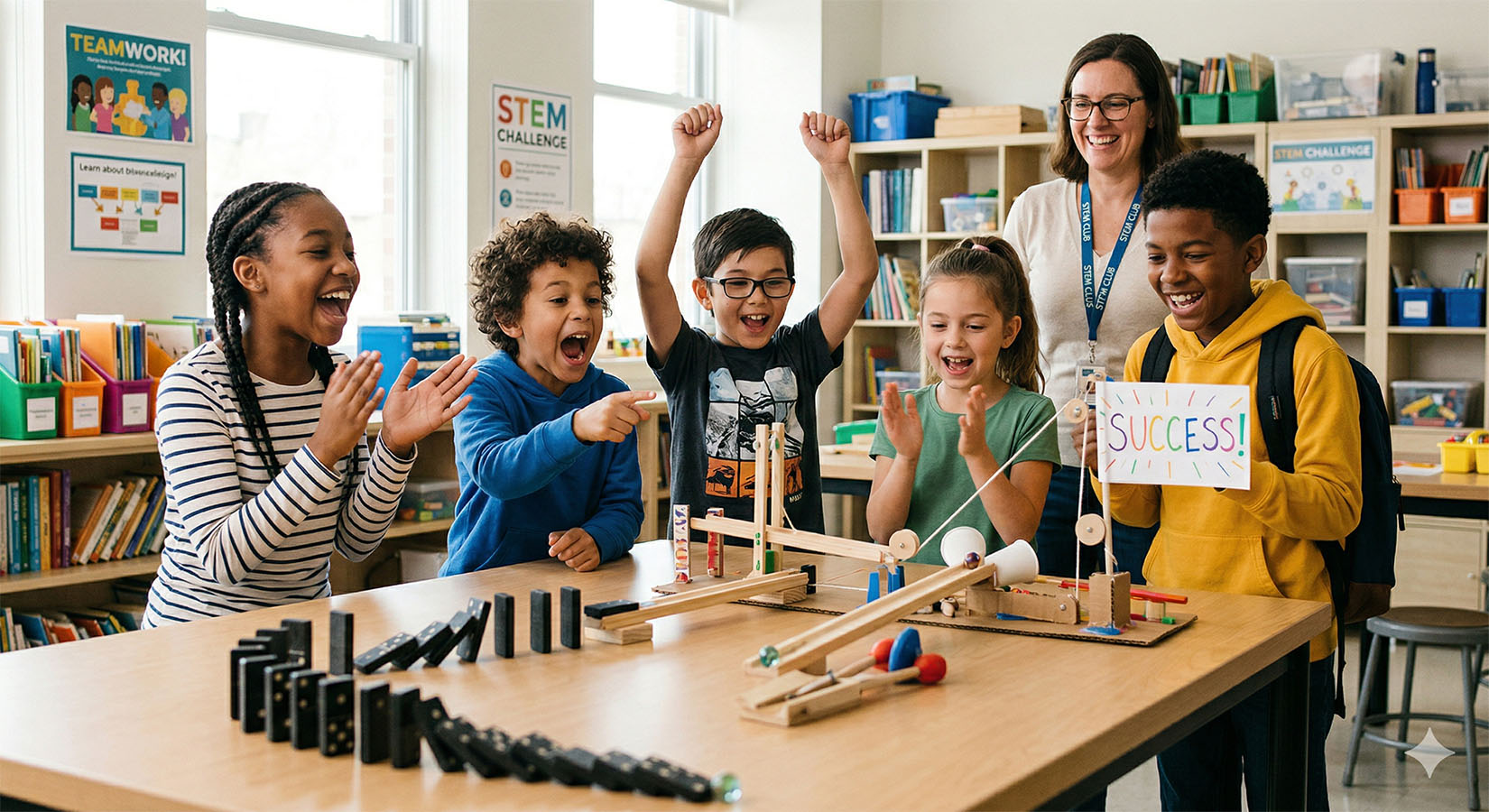
Rube Goldberg Machines Program “Chain Reaction”
A marble rolls down a ramp, tips a lever, knocks dominoes into a pulley that raises a flag — and your child built every piece of it. The physics is the judge: it either works or it doesn’t. On the final two days, teams connect their machines into one giant chain reaction performed live for parents on Friday.
What They Learn
- Physics principles: energy transfer, potential vs. kinetic energy, force multiplication
- Engineering iteration — build, test, fix, repeat until reliable
- Reliability testing — “Does it work 3 times in a row?”
- Team collaboration across defined roles
- Documentation — recording what works and why
Materials: Ramps, levers, dominoes, pulleys, marbles, everyday objects
What Makes This Different
- Physics is the judge. No partial credit — the chain works or it doesn’t. Honest, immediate feedback.
- Named Reaction Rules. “Height Is Stored Speed,” “Small Push Big Move,” “Reliable Beats Spectacular.”
- 5 rotating roles. Architect, Precision Builder, Creative Improviser, Tester, Documenter.
- Mega-machine finale. Thursday & Friday: teams connect chains into one continuous reaction for a live parent performance.
Zero screens.