New
🌟️Summer 2026 Camps Now Enrolling — Ages 5-12 in Bellevue & Bothell
Enroll Now
Save
Book 2+ camps this summer — families save up to $800
Pricing
$50 off
🤝Bring a friend, both families save $50 — no code needed
Pricing
Camps

Robotics “Build Yourself” — Bothell, August 17–21

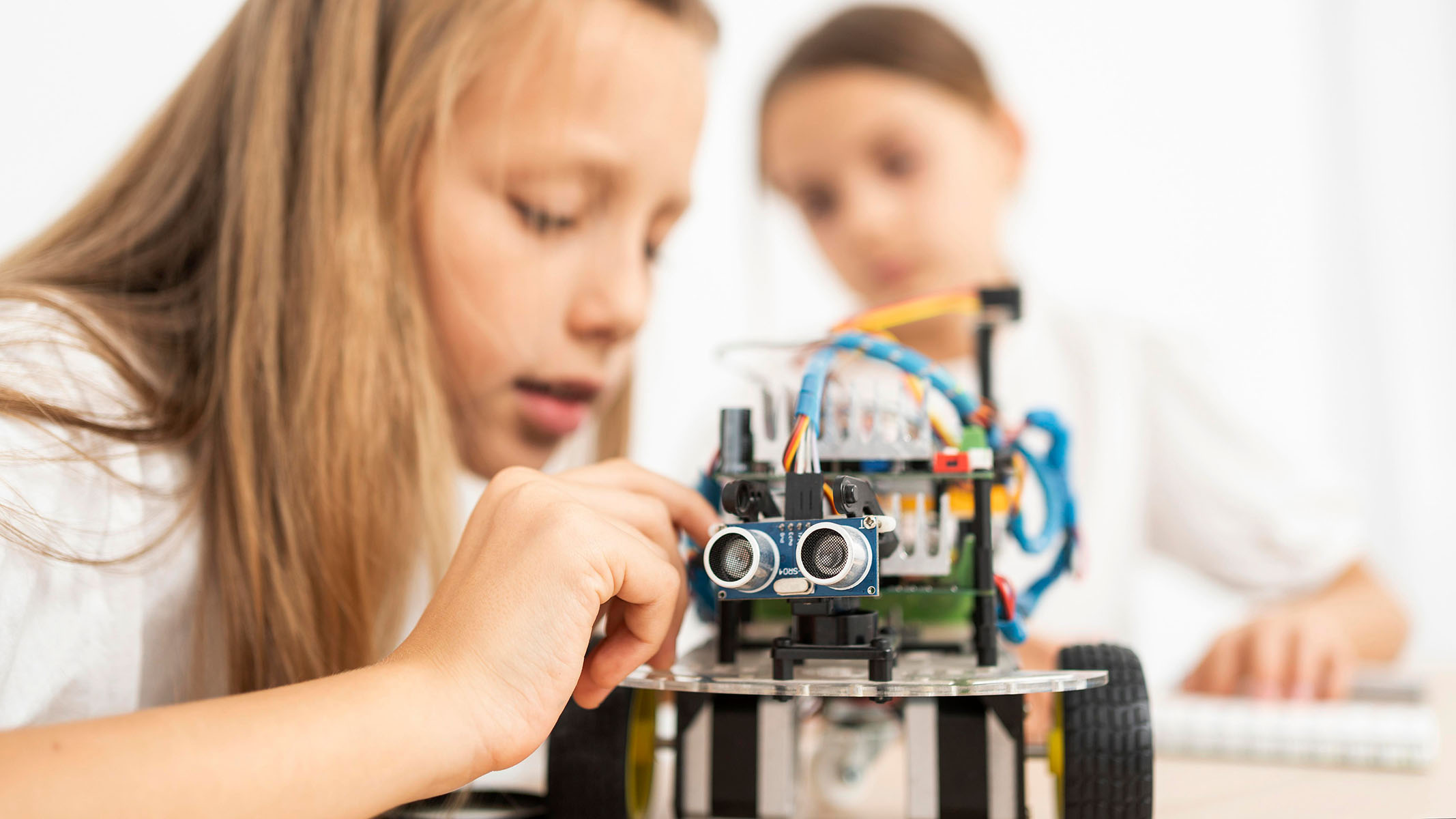
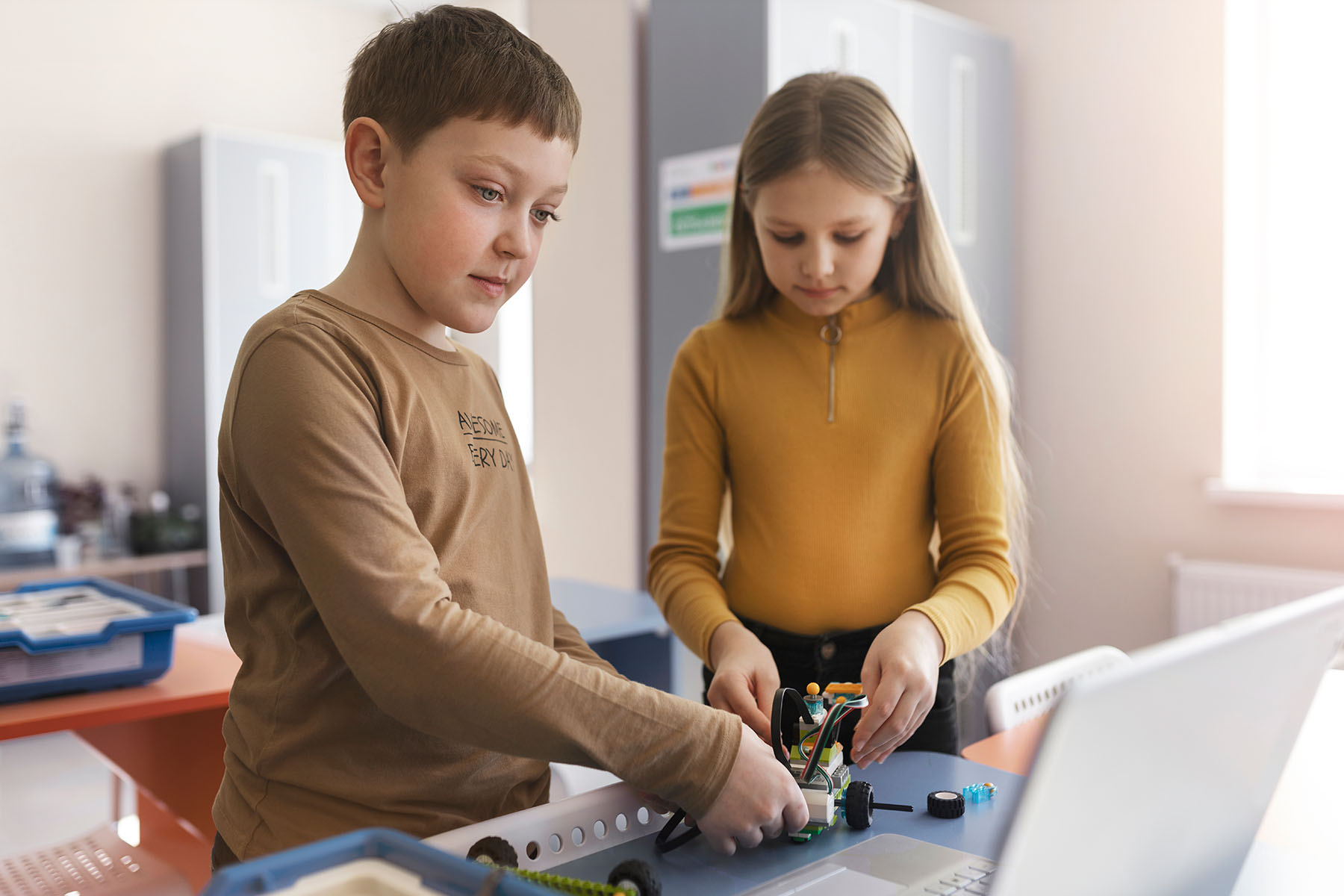
Picture your child crouching on the floor, watching a robot they just programmed dodge an obstacle — then jumping up to fix the code when it clips a corner. Over five days, children program real Codey Rocky and other robots using mBlock (block-based coding built on MIT Scratch), working through sensors, loops, and conditionals — not on worksheets, but by making a physical robot do something and seeing what actually happens. Every session starts with a sketch in the Designer Notebook before anyone touches code. By Friday, they’re writing programs that navigate a maze on their own.

Enroll Now

Robotics “Build Yourself” Summer Camp

Picture your child crouching on the floor, watching a robot they just programmed dodge an obstacle for the first time — then jumping up to fix the code when it clips a corner. That is what a typical afternoon looks like at the Robotics “Build Yourself” camp.

Over five days, children program Codey Rocky and other robots using mBlock (block-based coding built on MIT Scratch). They start by making a robot show emotions and react to button presses. By midweek, they are using real sensors — light, sound, color, and tilt — to make their robots respond to the world around them. By the final day, they are writing programs that navigate a maze on their own.

What Your Child Will Do:

  • Block-Based Coding: Build real programs using sequences, loops, conditionals, and variables. Your child drags and connects code blocks to control a physical robot — not a character on a screen.
  • Sensors & Interaction: Program robots to detect obstacles, respond to claps, follow colored lines, and react to being tilted or shaken. The robot moves on the floor, and your child moves with it.
  • Debugging & Testing: “Does it always avoid the obstacle? Test it five more times.” Your child learns to find what went wrong and fix it systematically — a skill that transfers far beyond coding.
  • Design Challenges: Build a working Simon Says memory game from scratch, create a robot “show” with choreographed emotions and movements, and tackle an autonomous maze challenge.
  • Presentation & Reflection: Every day ends with Show & Tell, where your child demonstrates their work and explains their thinking to the group.

Why This Camp? At ThinkAhead Lab, your child picks their own challenge level every day. We use a Green / Orange / Purple system: Green builds confidence with a clear starting point, Orange adds complexity for those ready to stretch, and Purple is open-ended for kids who want to design, not just follow instructions. A bold first-grader can tackle the same challenge as a cautious fifth-grader. Both choices are respected. Children also rotate through roles — Coder, Tester, Designer, and Presenter — so they discover what they are naturally good at instead of being told.

Prerequisites: None. Whether your child has never seen a line of code or already builds in Scratch at home, our challenge system scales to meet them exactly where they are.

Typical Day Schedule:

Camp runs Monday through Friday, 9:00 AM – 4:00 PM. Here is what a typical day looks like:

Each camp day is designed to balance focused coding sessions with movement, snacks, and outdoor time. Here is what a typical day looks like:

9:00–9:30: Student Arrival — Settle in, reconnect with yesterday’s project, and get ready to build.

9:30–9:45: The Hook — A mystery or challenge kicks off the day. (“There’s something on your table. It’s sleeping. Can you wake it up?” or “What if I told you there’s a way to make Codey dance forever with just two blocks?”)

9:45–10:00: Designer Notebook — Your child sketches a plan, sets a goal for the day, and picks their challenge level (Green, Orange, or Purple).

10:00–10:45: Morning Build Session — A short demo followed by deep hands-on coding. Robots are on the floor. Your child is crouching, testing, adjusting. The instructor asks questions, not gives answers.

10:45–11:00: Snack Break + Brain Break — Fuel up, then a quick movement activity tied to the day’s concept. (Monday it might be “walk like an algorithm.” Thursday it might be “be the obstacle sensor.”)

11:00–12:15: Extended Coding Session — Deeper work, new sensor challenges, or iteration on the morning project. Role rotation happens here — Coders and Testers swap, and every child gets to try both sides.

12:15–1:00: Lunch Break — Time to recharge and talk about what they are building.

1:00–2:30: Afternoon Build Session — The longest creative block of the day. This is where the biggest breakthroughs happen. Students go deep on their chosen challenge, and the instructor circulates with questions: “What have you tried so far?” “Does it work every time?”

2:30–2:45: Snack Break

2:45–3:20: Show & Tell + Slow Look — Your child demos their work for the group. Peers practice “Slow Look” — naming one detail they almost missed. This builds observation skills and public speaking confidence.

3:20–3:45: Reflection + Tomorrow’s Teaser — “What happened today? What do you want to try tomorrow?” Your child tracks their own growth in their Designer Notebook. Then a sneak peek at tomorrow’s challenge.

3:45–4:00: Pack-Up + Pickup

What Parents Are Saying:

“On Wednesday, I watched my son explain to his little sister why his robot kept bumping into walls — ‘The sensor checks too slow, so it doesn’t see the wall in time.’ He was debugging out loud at the dinner table. I don’t know what you did, but something clicked that goes way beyond robots.”

— Priya S., Bellevue

“My daughter is the kind of kid who gives up fast when something is hard. By day three, she was choosing the Orange challenge on her own. When her code didn’t work, she said ‘I need to test it again’ instead of ‘I can’t do it.’ That shift is worth more than any trophy.”

— David K., Redmond

“He walked up to me at pickup on Friday holding his Designer Notebook open to a page of sketches. He said, ‘This is the plan I made, and this is what actually happened, and this is what I would change.’ He’s eight. I’ve never seen him reflect on his own work like that.”

— Katherine M., Kirkland

What To Bring:

  • Refillable water bottle
  • Packed lunch and two snacks (morning and afternoon)
  • A creative mind and willingness to try

All robots, coding equipment, sensors, and materials are provided. Camp fee includes full use of Codey Rocky robots, mBlock software, Designer Notebooks, and all engineering supplies.

Safety and Well-being

We place the highest priority on the safety and well-being of our campers. Our instructors are carefully trained to ensure a secure and supportive environment at all times. We maintain low instructor-to-student ratio so every child gets individual attention. All staff members are equipped with basic first-aid training and prepared to manage any health-related concerns swiftly and effectively. Our camp setting encourages inclusivity — every child is welcomed at whatever challenge level feels right for them, and switching to an easier level is treated as a smart strategy, never a failure. No child is singled out, compared, or pushed beyond their comfort zone.

What Your Child Will Gain:

Your child will walk away from this camp with far more than “I learned robotics.” By the end of the week, they will have built:

  • Coding logic that transfers: Sequences, loops, conditionals, and variables — the same building blocks behind every programming language, learned through physical robots they can see and touch.
  • A debugging mindset: The habit of asking “Does it actually work? Let me test it again” instead of assuming — a thinking tool that applies to math homework, science projects, and everyday problem-solving.
  • Persistence without frustration: Through the Green/Orange/Purple challenge system, your child learns to choose challenges that stretch them without overwhelming them — and to switch levels strategically when needed.
  • Teamwork through role rotation: By cycling through Coder, Tester, Designer, and Presenter roles, your child discovers which parts of the process they are naturally drawn to — and practices the parts that do not come as easily.
  • Self-directed learning habits: Planning before building, sketching before coding, reflecting after testing. Your child leaves with a Designer Notebook full of their own plans, observations, and ideas — proof of a week of real thinking.

Location

Canyon Park East, 22215 26th Ave SE, Bothell, WA 98021
(location confirmation in progress, expected soon)

Visit our Parent FAQ Page.

Key Details

Ages

5-12 years

Location

Bothell Branch, Canyon Park East

Price

$575 $675

start dateend date

17 Aug – 21 Aug 2026

Times

9:00 am – 4:00 pm

Days

Mon, Tue, Wed, Thu, Fri
icon

Secure your spot today. Booking multiple camps? Families save up to $800!

Similar Camps