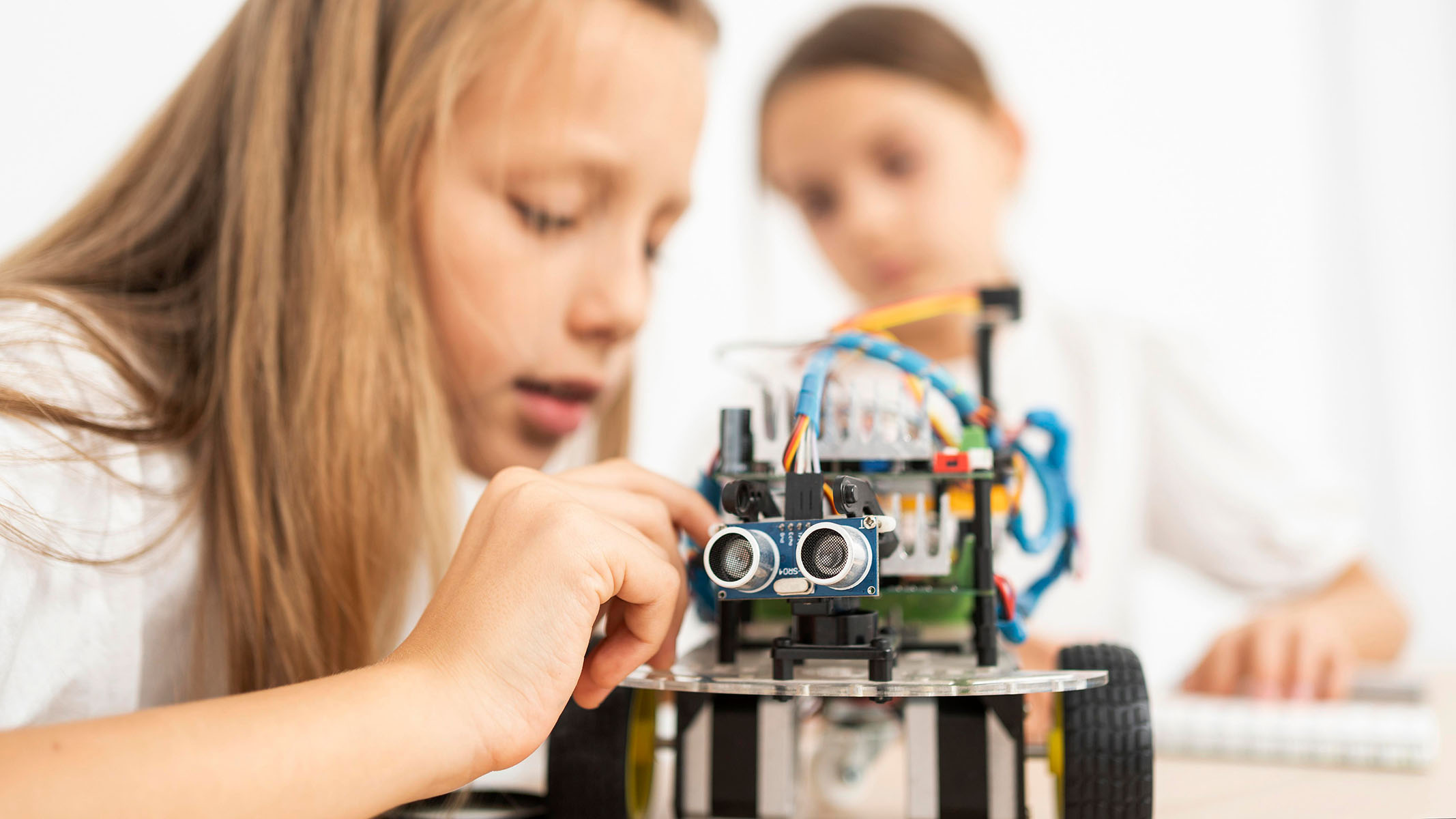
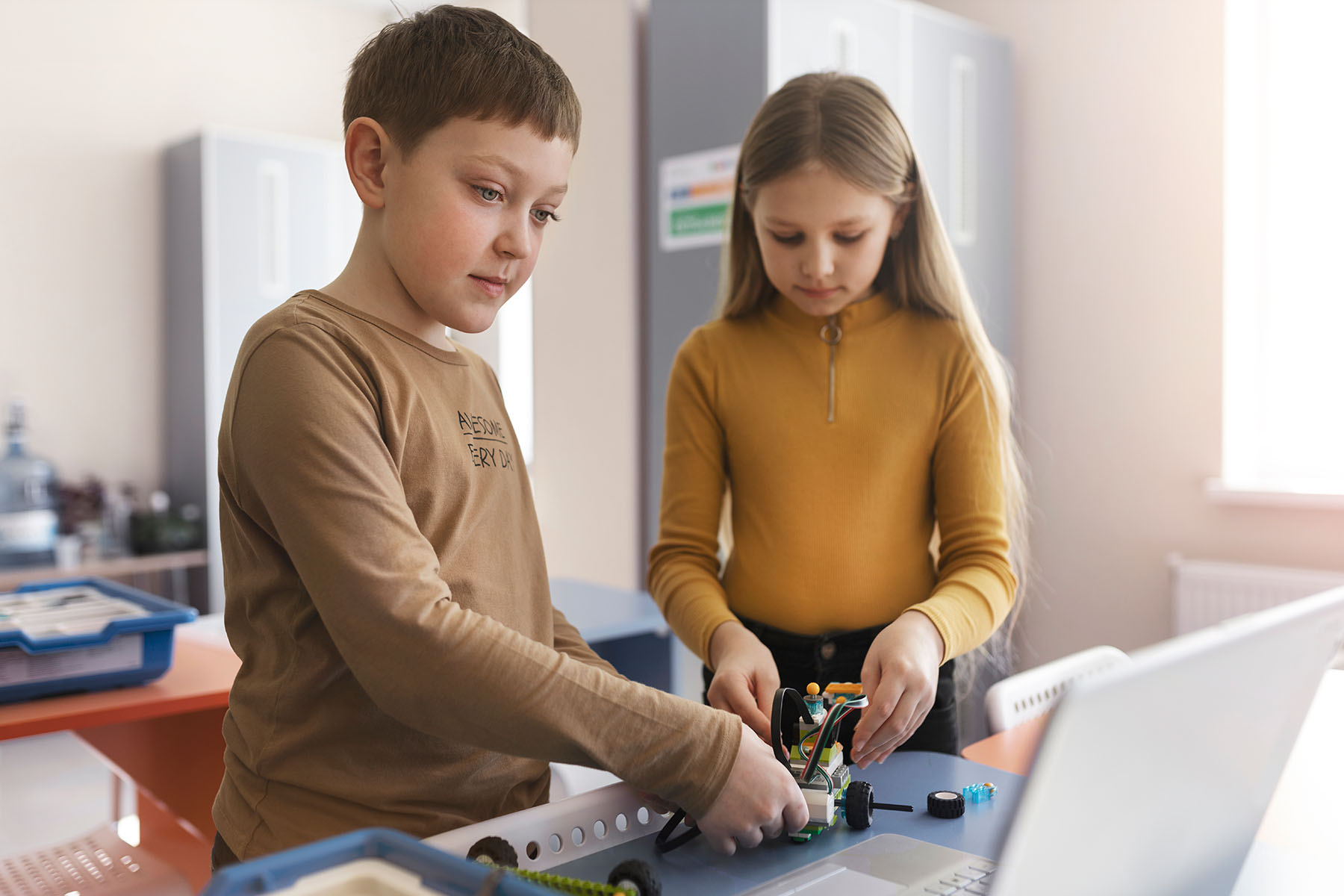
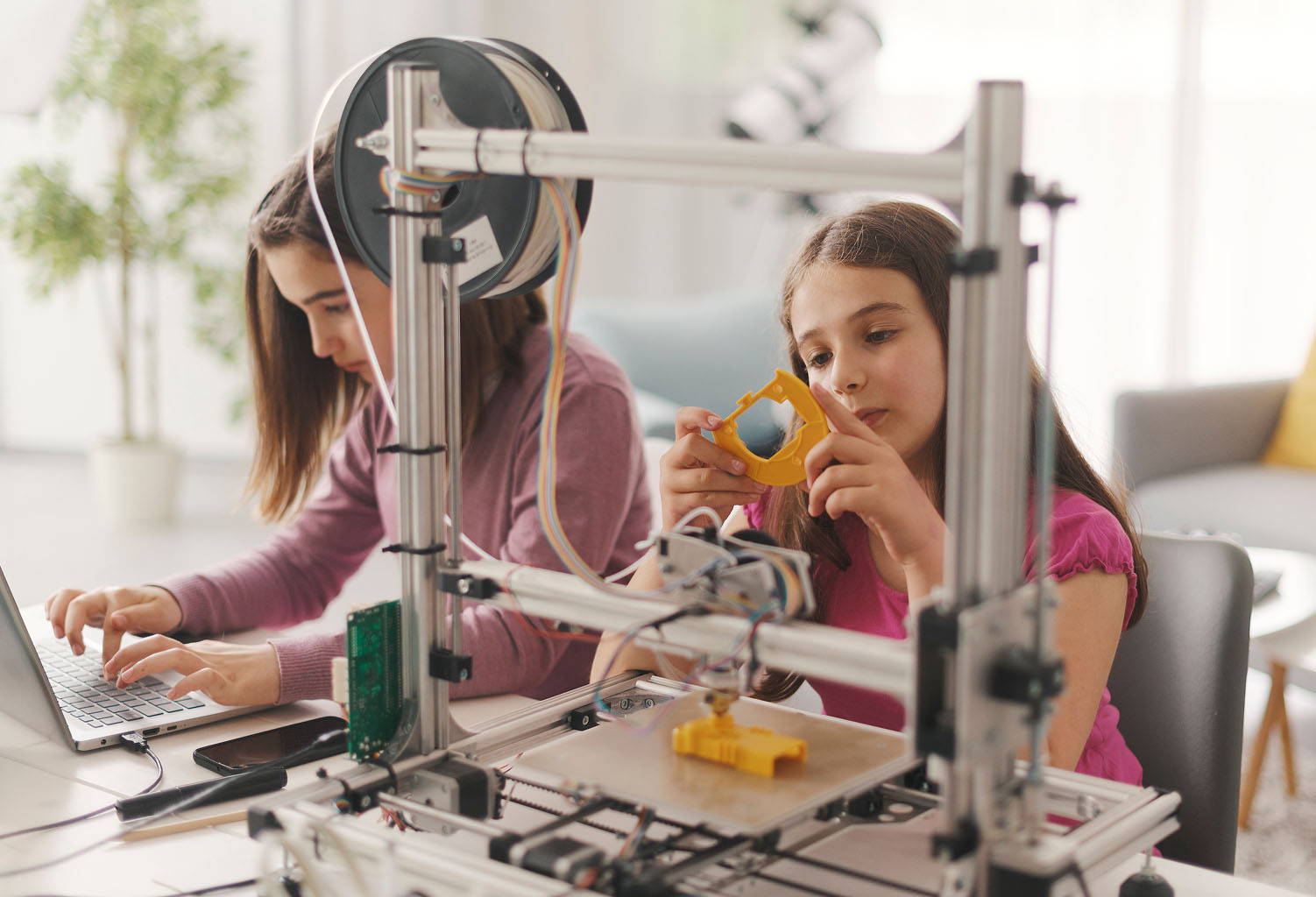


Picture your child crouching on the floor, watching a robot they just programmed dodge an obstacle for the first time — then jumping up to fix the code when it clips a corner. That is what a typical afternoon looks like at the Robotics “Build Yourself” camp.
Over five days, children program Codey Rocky and other robots using mBlock (block-based coding built on MIT Scratch). They start by making a robot show emotions and react to button presses. By midweek, they are using real sensors — light, sound, color, and tilt — to make their robots respond to the world around them. By the final day, they are writing programs that navigate a maze on their own.
What Your Child Will Do:
- Block-Based Coding: Build real programs using sequences, loops, conditionals, and variables. Your child drags and connects code blocks to control a physical robot — not a character on a screen.
- Sensors & Interaction: Program robots to detect obstacles, respond to claps, follow colored lines, and react to being tilted or shaken. The robot moves on the floor, and your child moves with it.
- Debugging & Testing: “Does it always avoid the obstacle? Test it five more times.” Your child learns to find what went wrong and fix it systematically — a skill that transfers far beyond coding.
- Design Challenges: Build a working Simon Says memory game from scratch, create a robot “show” with choreographed emotions and movements, and tackle an autonomous maze challenge.
- Presentation & Reflection: Every day ends with Show & Tell, where your child demonstrates their work and explains their thinking to the group.
Why This Camp? At ThinkAhead Lab, your child picks their own challenge level every day. We use a Green / Orange / Purple system: Green builds confidence with a clear starting point, Orange adds complexity for those ready to stretch, and Purple is open-ended for kids who want to design, not just follow instructions. A bold first-grader can tackle the same challenge as a cautious fifth-grader. Both choices are respected. Children also rotate through roles — Coder, Tester, Designer, and Presenter — so they discover what they are naturally good at instead of being told.
Prerequisites: None. Whether your child has never seen a line of code or already builds in Scratch at home, our challenge system scales to meet them exactly where they are.