



Picture this: your child walks in on Tuesday morning and picks up the creature they designed on Monday — now solid, real, sitting in their hand. They turn it over, squint at one leg, and say, “I want to make that thicker next time.” That moment — the gap between what they imagined and what the printer actually made — is where real learning happens.
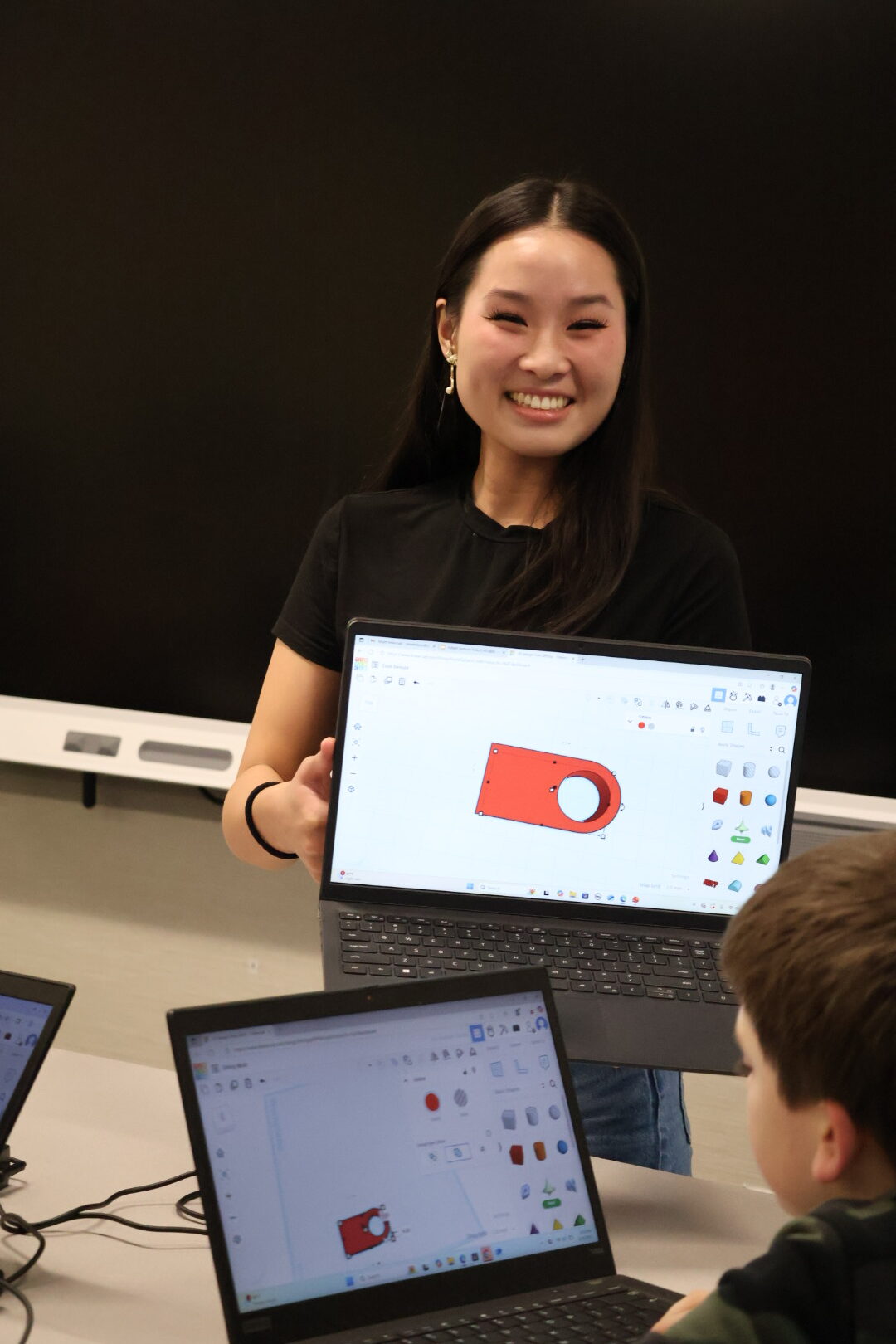
Over four days, your child will move through the full design cycle that professional product designers use: sketch an idea by hand, build it in TinkerCAD (real Autodesk CAD software, not a dumbed-down kids’ version), send it to a Bambu Lab 3D printer, hold the finished object, and decide what to improve. Along the way, they’ll learn named design rules like “Flat on the Ground,” “Group It or Lose It,” and the YHT Printability Rule — thinking tools they can carry into any future project.
Note: This is a short week, 4 days only.
What Your Child Will Do:
- Sketch before they build. Every project starts in the Designer Notebook — pencil sketches with front, side, and top views — before anyone touches a mouse. This is how real designers work, and it saves hours of frustration.
- Design in TinkerCAD. Your child will learn 3D design fundamentals: combining shapes, boolean subtraction (cutting holes through objects), adding text, measuring precisely, and remixing designs from the TinkerCAD gallery.
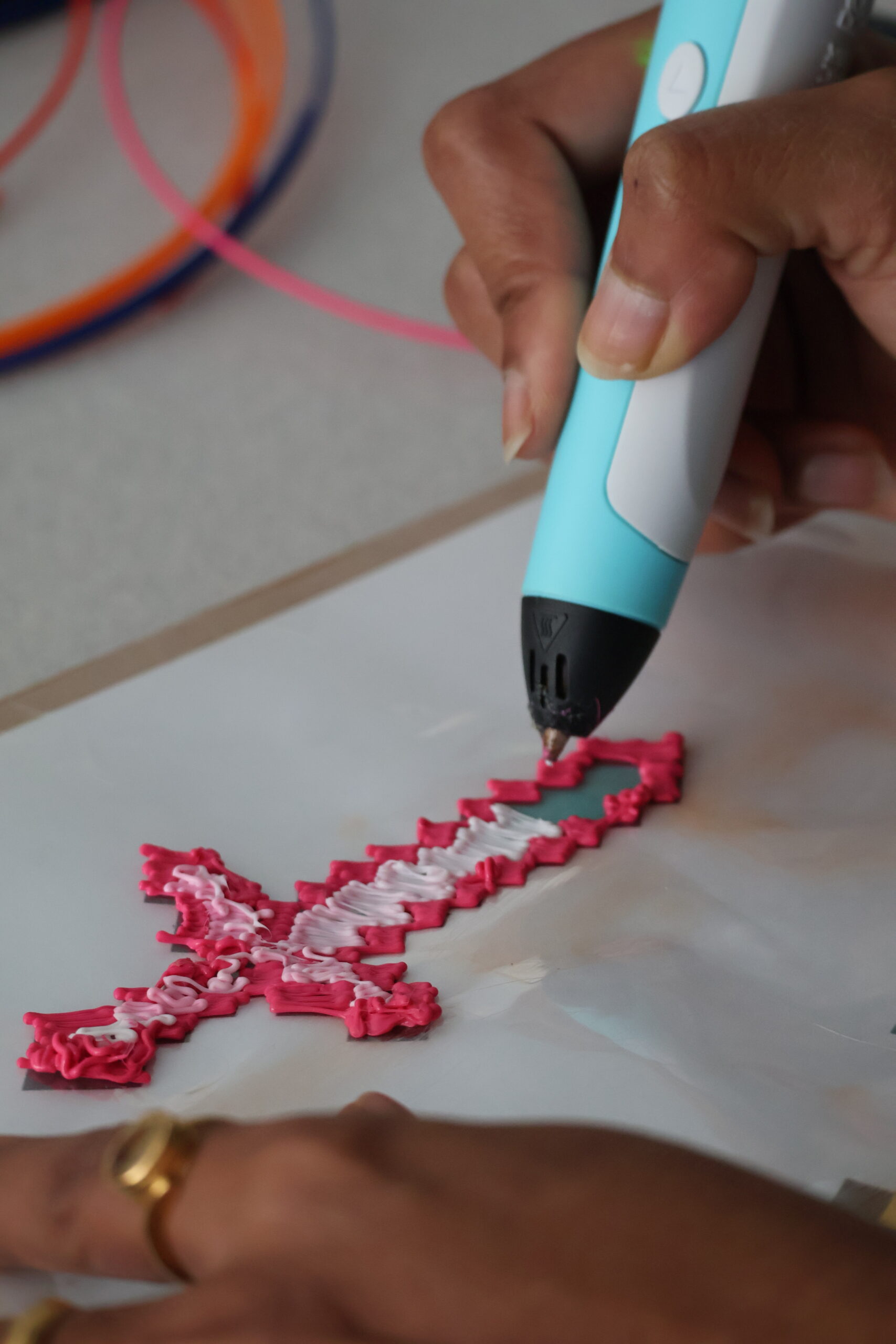
- Sculpt with 3D pens. Art-minded children can sculpt freehand creatures, wearable art, and decorations using SCRIB3D 3D pens — a physical, tactile entry point into three-dimensional thinking. This is not a lesser track; it is a different creative path taken equally seriously.
- Print on real 3D printers. Designs are printed on Bambu Lab A1 Mini printers — the same machines used by professional makers and product designers. Your child will learn why some designs print beautifully and others turn into spaghetti, and what to do about it.
- Build a capstone project. By the end of the week, your child will design and print a self-directed final project — something they choose, plan, and execute from start to finish.
Why This Camp?
Most 3D printing programs hand kids a file and press print. That is a demo, not an education. At ThinkAhead Lab, your child chooses their own challenge level each day (Green, Orange, or Purple), sketches before building, tests their own work honestly, and learns to say “this part isn’t right yet” instead of “I’m done.” They use the Designer Notebook to plan, track, and reflect — the same habit loop used by working engineers. And every single printed object goes home with your child, along with the thinking behind it.
Prerequisites: None. Children ages 5–12 of all experience levels are welcome. The self-paced challenge system means a bold 6-year-old and a cautious 11-year-old can both feel stretched without feeling lost.
