New
🌟️Summer 2026 Camps Now Enrolling — Ages 5-12 in Bellevue & Bothell
Enroll Now
Save
Book 2+ camps this summer — families save up to $800
Pricing
$50 off
🤝Bring a friend, both families save $50 — no code needed
Pricing
Camps

3D Design & Printing “Make It Real” — Bothell, Aug 10–14

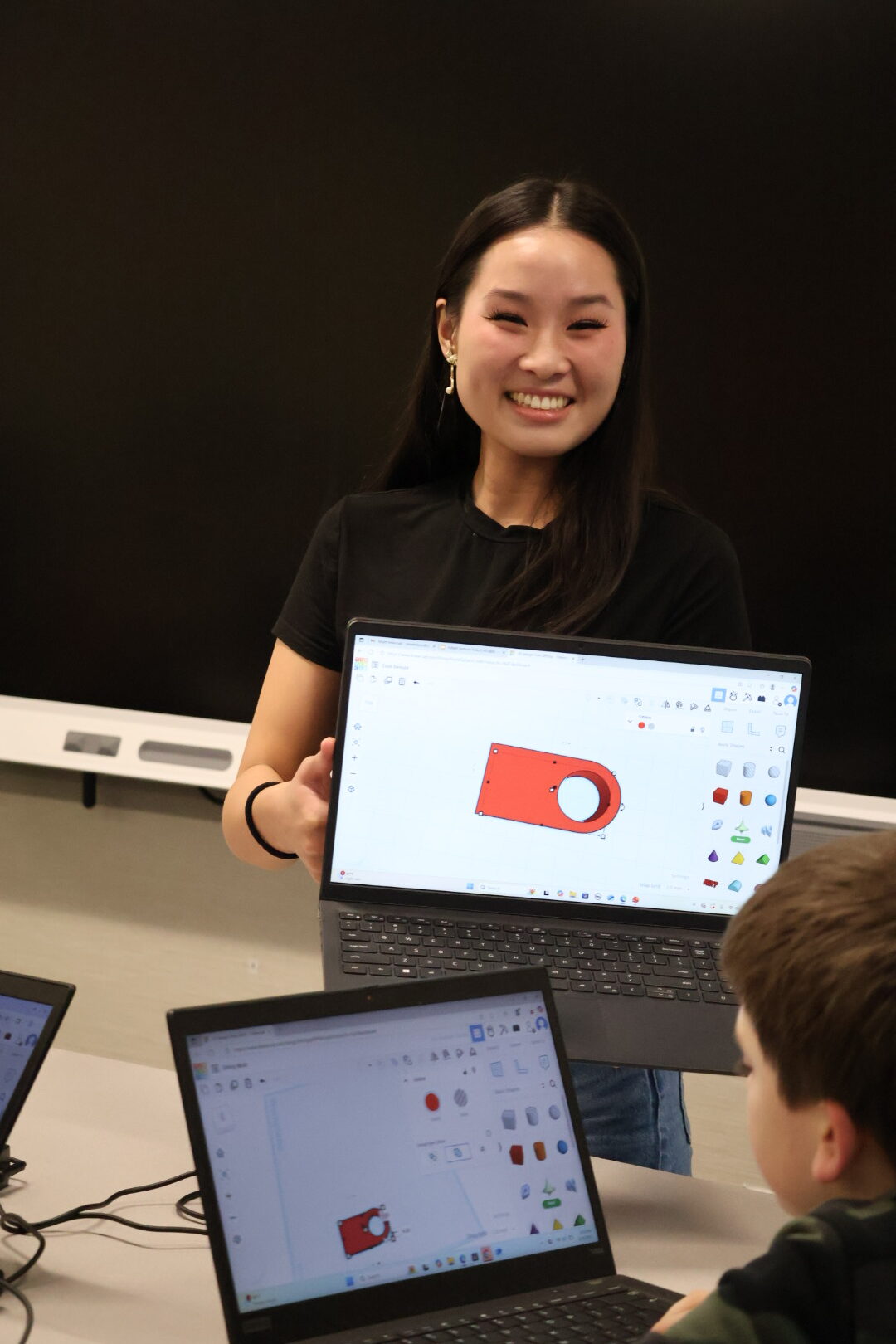
Imagine your child walking in and picking up a creature they designed the day before: now solid, real, sitting in their hand. In this camp, children sketch ideas in a Designer Notebook, build them in TinkerCAD (the same Autodesk software used by professional designers), and print them on real Bambu Lab 3D printers. Art-minded kids sculpt freehand with 3D pens; engineering-minded kids design functional objects on screen — both paths are taken seriously. Every printed object goes home!

Enroll Now

3D Design & Printing “Make It Real” Summer Camp

Picture this: your child walks in on Tuesday morning and picks up the creature they designed on Monday — now solid, real, sitting in their hand. They turn it over, squint at one leg, and say, “I want to make that thicker next time.” That moment — the gap between what they imagined and what the printer actually made — is where real learning happens.

Over five days, your child will move through the full design cycle that professional product designers use: sketch an idea by hand, build it in TinkerCAD (real Autodesk CAD software, not a dumbed-down kids’ version), send it to a Bambu Lab 3D printer, hold the finished object, and decide what to improve. Along the way, they’ll learn named design rules like “Flat on the Ground,” “Group It or Lose It,” and the YHT Printability Rule — thinking tools they can carry into any future project.

What Your Child Will Do:

  • Sketch before they build. Every project starts in the Designer Notebook — pencil sketches with front, side, and top views — before anyone touches a mouse. This is how real designers work, and it saves hours of frustration.
  • Design in TinkerCAD. Your child will learn 3D design fundamentals: combining shapes, boolean subtraction (cutting holes through objects), adding text, measuring precisely, and remixing designs from the TinkerCAD gallery.
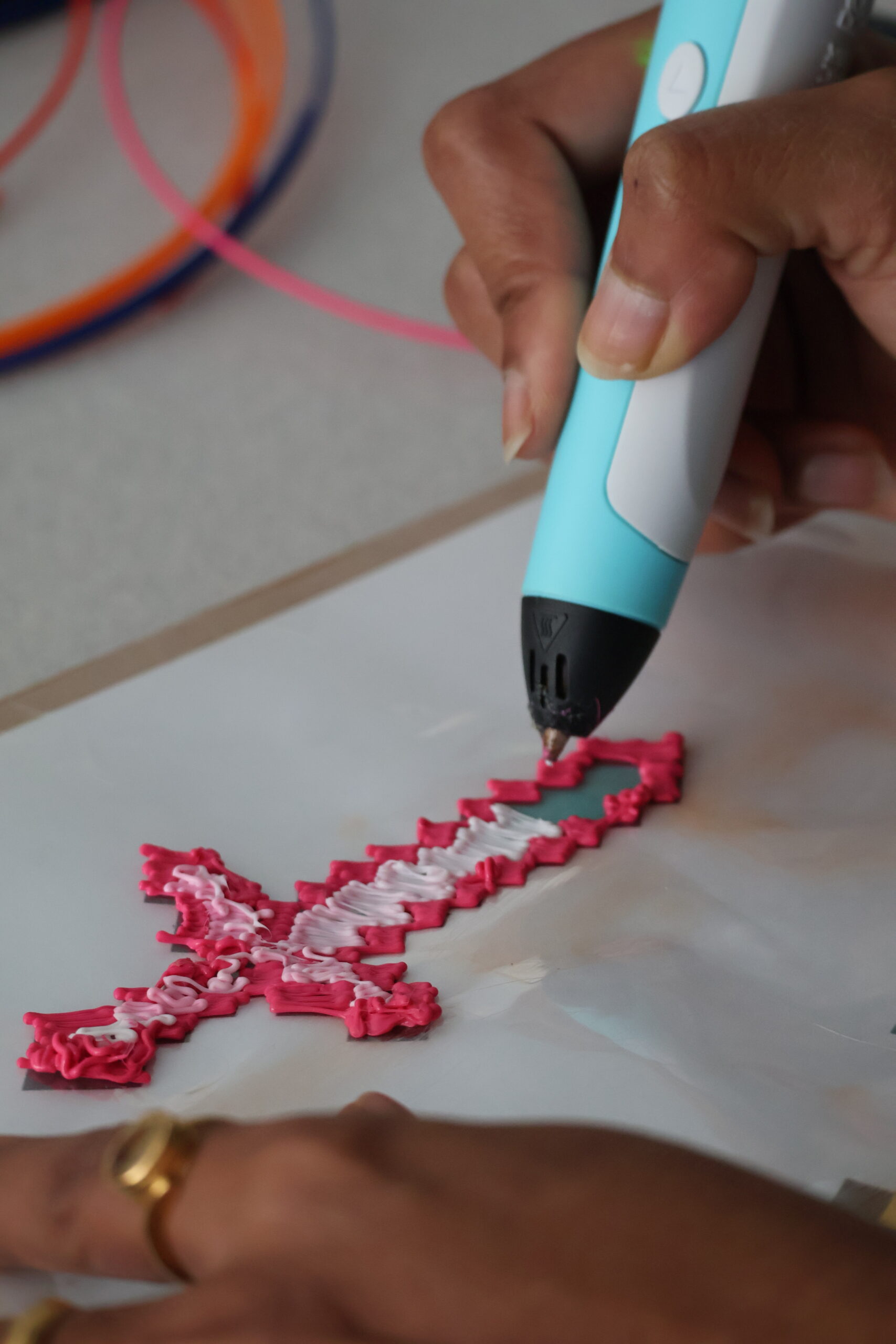
  • Sculpt with 3D pens. Art-minded children can sculpt freehand creatures, wearable art, and decorations using SCRIB3D 3D pens — a physical, tactile entry point into three-dimensional thinking. This is not a lesser track; it is a different creative path taken equally seriously.
  • Print on real 3D printers. Designs are printed on Bambu Lab A1 Mini printers — the same machines used by professional makers and product designers. Your child will learn why some designs print beautifully and others turn into spaghetti, and what to do about it.
  • Build a capstone project. By the end of the week, your child will design and print a self-directed final project — something they choose, plan, and execute from start to finish.

Why This Camp?

Most 3D printing programs hand kids a file and press print. That is a demo, not an education. At ThinkAhead Lab, your child chooses their own challenge level each day (Green, Orange, or Purple), sketches before building, tests their own work honestly, and learns to say “this part isn’t right yet” instead of “I’m done.” They use the Designer Notebook to plan, track, and reflect — the same habit loop used by working engineers. And every single printed object goes home with your child, along with the thinking behind it.

Prerequisites: None. Children ages 5–12 of all experience levels are welcome. The self-paced challenge system means a bold 6-year-old and a cautious 11-year-old can both feel stretched without feeling lost.

Day Schedule:

Camp runs Monday through Friday, 9:00 AM – 4:00 PM. Here is what a typical day looks like:

9:00–9:30: Arrival & Warm-Up — Your child settles in, reconnects with yesterday’s work, and picks up any finished prints from the previous day’s designs. This is the “fresh eyes” moment: they look at their printed object and answer one question before doing anything else — “What would you change?”

9:30–9:45: Hook & Maker Rule of the Day — A mystery or challenge sparks curiosity (a failed print held up without explanation, a strange object on the table, a design puzzle to solve). One named design principle is introduced: “Flat on the Ground,” “Subtraction Is Creation,” or “Measure Twice, Print Once.”

9:45–10:45: Morning Design Session — Goal setting in the Designer Notebook (sketch first, then build), a short TinkerCAD demo, then deep hands-on design work. Children choose their challenge level — Green, Orange, or Purple — and work at their own pace. Some work in TinkerCAD; others sculpt with 3D pens.

10:45–11:15: Snack & Brain Break — Snack time followed by a movement activity tied to the day’s concept. (Example: “Make the letter T with your body. Now Y. Now H.” These shapes come back later as the YHT printability rule — the body remembers.)

11:15–12:15: Second Design Session — Deeper work, new challenges, or iteration on the morning project. Instructors circulate asking questions, not giving answers: “Does your design match your sketch? What changed and why?” Designs are queued for printing.

12:15–1:00: Lunch Break — Time to recharge, talk about what they are building, and come back with fresh eyes.

1:00–2:30: Afternoon Build Session — The longest creative block of the day. This is where the biggest breakthroughs happen. Students go deep on their projects, review prints coming off the printers, and iterate on designs. Capstone project work begins mid-week.

2:30–2:50: Snack & Brain Break — A second reset. By now, children are fully absorbed in their projects.

2:50–3:20: Show & Tell — Children demo their work to the group. Peers practice the “Slow Look” — naming one specific detail they almost missed. This is not just celebration; it trains the observation skills that separate good designers from great ones.

3:20–3:45: Reflection & Tomorrow’s Teaser — What happened today, what to try tomorrow. Children record their progress in the Designer Notebook and get a sneak peek of the next day’s challenge.

3:45–4:00: Pack-Up & Pickup — Clean up, secure projects, and get ready for pickup.

What Parents Are Saying:

“My son walked out on the last day carrying a bag of things HE made — a creature, a pencil cup, a little gift he designed for his sister. He kept pulling them out at dinner and explaining how each one was different from his sketch and why. I’ve never seen him that proud of something he built.”
— Rachel M., Redmond

“What surprised me was the notebook. My daughter came home with sketches, measurements, notes about what went wrong and what she wanted to fix. She wasn’t just playing with a printer — she was actually planning and thinking through her designs before she touched the computer. That habit has carried over into her schoolwork.”
— David K., Bellevue

“My kid has always been the ‘artsy one’ and usually checks out when things get technical. But here she spent the whole week sculpting with the 3D pen AND designing on the computer — nobody told her she had to pick one. She told me on the drive home, ‘Mom, I think I might actually be an engineer too.’ That was worth everything.”
— Priya S., Kirkland

What To Bring:

  • Refillable water bottle
  • Packed lunch and two snacks (morning and afternoon)
  • A creative mind and willingness to try

All materials are provided — including 3D printing filament, 3D pens and refills, Designer Notebooks, and all equipment. Your child does not need to bring a laptop or any supplies. Every object your child designs and prints is theirs to take home.

Safety and Well-being

Your child’s safety is our first priority. All ThinkAhead Lab instructors are trained in child safety protocols and maintain a maximum 1:8 instructor-to-student ratio throughout the day.

3D printer safety: Bambu Lab A1 Mini printers have open print beds. Children are taught to observe from a safe distance while prints are in progress and never touch the hot nozzle or heated bed. Instructors manage all printer loading, filament changes, bed removal, and maintenance. Finished prints are removed only by instructors once cooled.

3D pen safety: SCRIB3D 3D pens have heated tips. Before any child uses a pen, instructors walk through safe handling procedures — where to hold, where not to touch, and how to set the pen down safely between uses. Instructors supervise 3D pen work directly and children are never left unattended with heated equipment.

Inclusive environment: Our programs welcome children of all backgrounds, abilities, and experience levels. The self-paced challenge system (Green, Orange, Purple) means every child works at a level that feels right for them — no one is singled out and no one is left behind. We take all learning differences seriously and adapt our approach to each child.

What Your Child Will Gain:

  • Spatial thinking: Your child will learn to see objects in three dimensions — rotating, measuring, and thinking about how flat shapes become solid objects. This is a foundational skill for math, science, art, and engineering.
  • The planning habit: Sketch before you build. Plan before you click. By the end of the week, your child will reach for a pencil before reaching for a mouse — a habit that transfers to school projects, art, and problem-solving of all kinds.
  • Patience and iteration: 3D printing teaches something most activities cannot — that the first version is rarely the final version, and that improving a design is not failure, it is the process. Your child will learn to look at their own work honestly and say, “Here is what I would change.”
  • Creative confidence: Whether your child leans toward art (3D pens, sculpting, creature design) or engineering (functional objects, precise measurements, problem-solving), they will discover that their particular kind of thinking is valued. Many children leave saying, “I didn’t know I could do that.”
  • The real design process: Your child will experience the same cycle used by professional product designers — sketch, design, prototype, test, iterate, present. Not a simplified version. The real thing, with real tools, producing real objects they hold in their hands.

Location

Ukrainian Cultural Center Toloka, 1940 124th Ave NE A108/A109, Bellevue, WA 98004
We are excited to partner with Ukrainian Cultural Center Toloka to bring this amazing camp to life!

Visit our Parent FAQ Page.

Key Details

Ages

5-12 years

Location

Bothell Branch, Canyon Park East

Price

$675 $575

start dateend date

10 Aug – 14 Aug 2026

Times

9:00 am – 4:00 pm

Days

Mon, Tue, Wed, Thu
icon

Secure your spot today. Booking multiple camps? Families save up to $800!

Similar Camps