


Picture this: on Friday afternoon, your child hands you a board game they built from scratch — a real board with hand-drawn spaces, a stack of cards with original creatures on them, a bag of tokens, and a set of rules they wrote and rewrote until every edge case was covered. They look you in the eye and say, “Okay, here’s how you play.” And it works. The game is balanced, the turns make sense, and you can tell that somebody thought hard about what makes it fun for both players, not just the one who designed it.
That’s what this camp builds toward. But the real learning happens in the messy middle — the four days before the showcase.
What Your Child Will Do
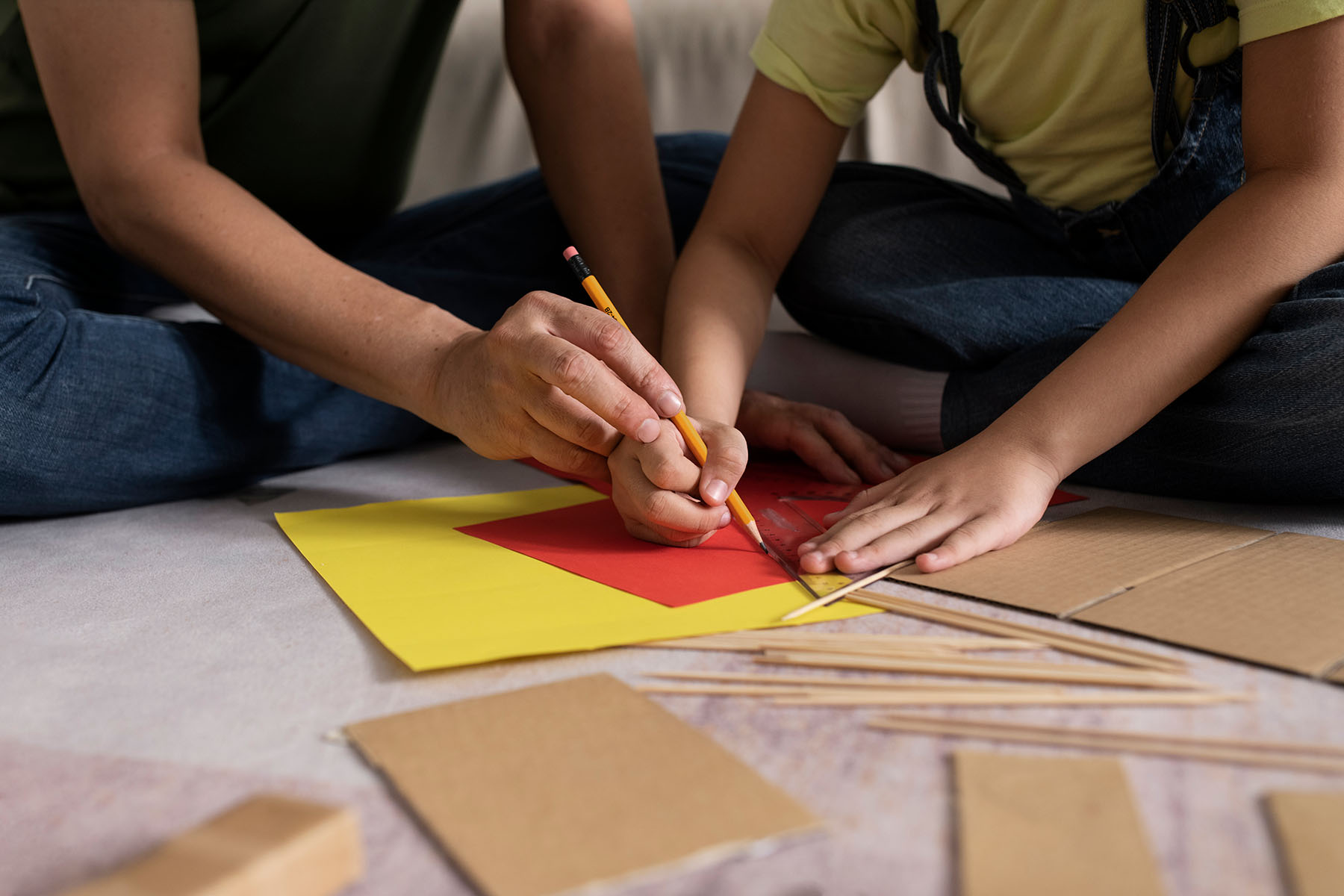
- Design an original game from nothing. No templates, no kits. Your child starts with a blank table and a question: “What kind of game do you want to exist?” By the end of the week, they have a fully playable board game or card game made from cardboard, markers, dice, and hand-cut tokens.
- Write rules that actually work. Writing game rules is a form of logical thinking most kids have never tried. If a rule is unclear, the playtester will find the hole — every time. Your child learns to write precisely, anticipate confusion, and close loopholes. It is the same skill behind writing good instructions, clear essays, and eventually, working code.
- Playtest and iterate like a real designer. Every afternoon, kids swap games and play each other’s creations. This is the honest check — a game either works or it doesn’t, and the players will tell you exactly where it broke. Your child learns to hear feedback without taking it personally, and to treat “this part is confusing” as useful information, not criticism.
- Rotate through every role. Over the week, every child works as Artist (designing the board, cards, and pieces), Rules Writer (writing and revising the instructions), and Tester (playing others’ games and giving structured feedback). They discover which part of the creative process lights them up — and they might surprise you.
- Present their finished game to parents. On the final day, families sit down and play the games their children designed. Your child teaches you the rules, watches you play, and fields your questions. This is not a poster on the wall — it is a live, interactive demonstration of everything they built.
Why This Camp?
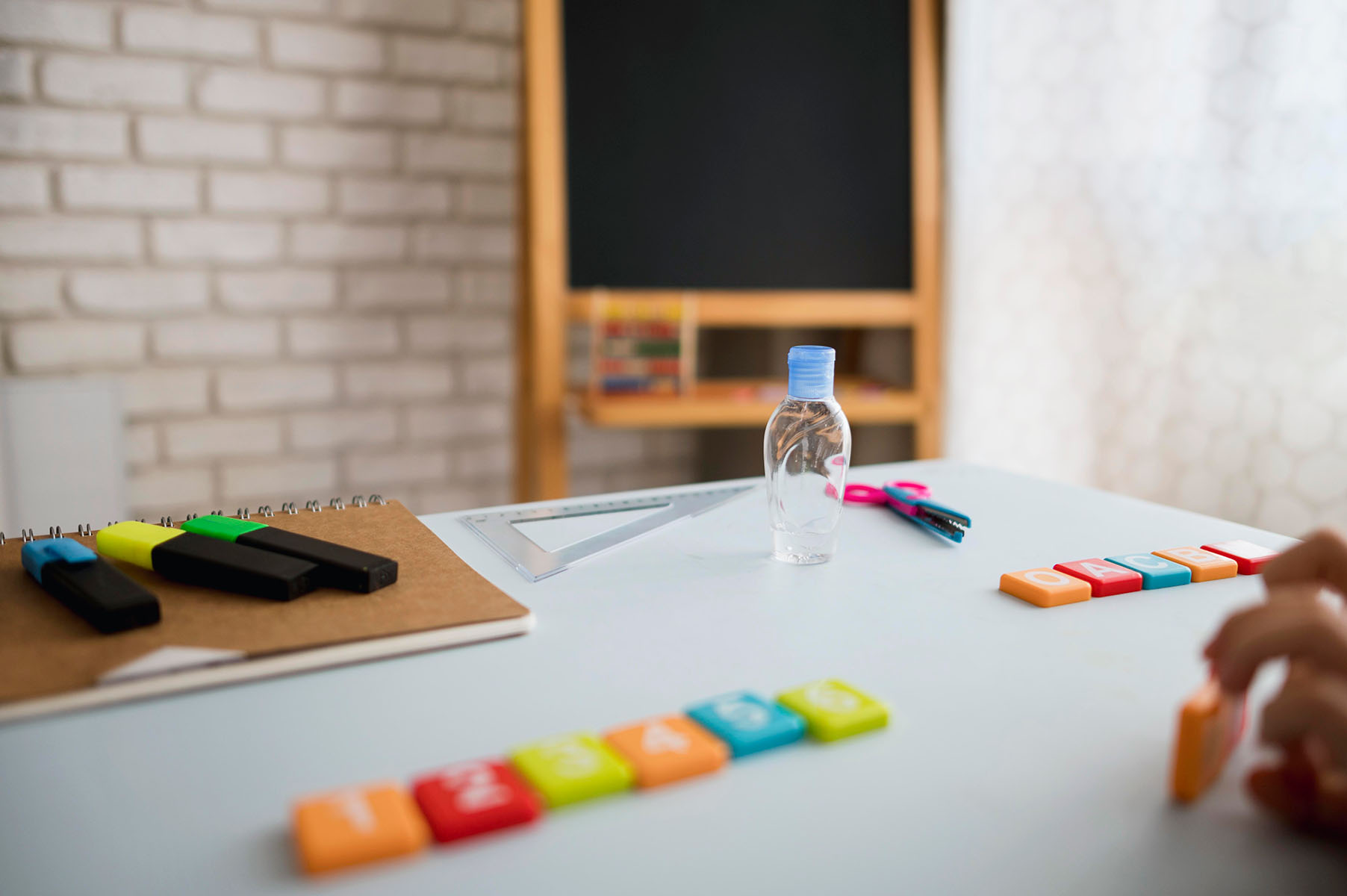
There are no screens in this program. Not as a gimmick — because the work is better without them. Cardboard is faster to prototype with than software. Hand-drawn cards carry more personality than digital ones. And when your child writes rules on paper, crosses out a sentence, and rewrites it clearer, they can see their own thinking improve in real time.
Underneath the cardboard and markers, your child is practicing systems thinking (how do all the pieces of a game connect?), Theory of Mind (what will another player think when they read this card?), and iterative design (make it, test it, fix it, test it again). These are the same skills professional game designers, engineers, and product developers use every day — just with friendlier materials.
ThinkAhead Lab’s challenge system means your child picks their own difficulty level. A confident 8-year-old can design a strategy game with multiple win conditions. A cautious 12-year-old can start with a simple card game and add complexity as they go. Both choices are respected. There is no single right answer — just the game your child is ready to build.
Prerequisites: None. Your child should be comfortable reading and writing short sentences (needed for rule-writing). No prior game design or art experience required — we provide all materials and teach every technique from scratch.